Blind Test: Netgear Nighthawk Rs100 vs Gtbox G Dock Egpu Docking Station - Which is Actually Better?
The Quest for the Ultimate External Expansion
In the evolving landscape of modern computing, the laptop has transitioned from a portable convenience to a primary workstation. However, even the most powerful ultrabooks and mobile workstations face a fundamental limitation: physical space. As users demand more from their portable machines—whether for high-end gaming, complex 3D rendering, or massive data processing—the need for external expansion has never been greater. This brings us to a unique "blind test" comparison between two devices that, on the surface, serve very different masters but ultimately compete for the same precious real-house on a professional's desk: the Netgear Nighthawk RS100 and the Gtbox G Dock eGPU Docking Station.
The Netgear Nighthawk RS100 represents the pinnacle of wireless connectivity, aiming to eliminate the bottleneck of data transfer speeds through the air. On the other hand, the Gtbox G Dock is a specialized piece of hardware designed to bridge the gap between mobile processing power and desktop-class graphical performance. While one focuses on the "invisible" network and the other on "visible" graphical muscle, both are essential components for a high-performance laptop ecosystem. This analysis dives deep into how these devices impact the user experience, productivity, and the future-proofing of a mobile setup.
The Network Foundation: Netgear Nighthawk RS100 Review
The Netgear Nighthawk RS100 is not just another router; it is a statement on the necessity of high-bandwidth, low-latency communication in a world dominated by cloud services and remote collaboration. For laptop users, the RS100 serves as the invisible umbilical cord that connects their portable device to the rest of the world. In an era where 4K video conferencing, large file transfers to NAS (Network Attached Storage), and cloud-based development environments are standard, the router has become a critical piece of the laptop's performance chain.
Built on the latest wireless standards, the RS100 emphasizes stability under load. One of the primary frustrations for laptop users is the "signal fade" as they move between rooms or the sudden jump in ping during a critical online session. The RS100 addresses this with an advanced antenna array and sophisticated beamforming technology. In a professional setting, this translates to uninterrupted focus. When a creative professional is uploading a several-gigabyte project to a client's server, the RS100 ensures that the laptop's Wi-Fi card isn't the weak link.
Furthermore, the RS100 offers a suite of management tools that allow users to prioritize traffic. This is particularly vital for households or offices where multiple devices compete for bandwidth. By prioritizing a work laptop over background streaming devices, the RS100 ensures that the "pro" in "MacBook Pro" or "Dell XPS" actually means something in terms of connectivity. Its inclusion of high-speed Ethernet ports also provides a reliable fallback for when the laptop is docked, offering a seamless transition between mobile freedom and stationary power.
Pros and Cons of the Netgear Nighthawk RS100
- Ultra-Fast Wireless Throughput: Leverages the latest Wi-Fi standards to provide speeds that rival wired connections, essential for modern cloud-heavy workflows.
- Exceptional Range and Stability: The internal antenna design minimizes dead zones, allowing for a consistent connection even in larger homes or multi-story offices.
- Advanced Traffic Management: Quality of Service (QoS) features allow users to prioritize their laptop's data, ensuring low latency for critical tasks like video calls or gaming.
- Robust Build Quality: Matches the aesthetic of high-end laptops while providing a thermal design that prevents throttling during long periods of heavy use.
- Steep Convergence: While excellent for networking, it does not provide direct hardware acceleration for the laptop itself, remaining a secondary support device.
- Setup Complexity: For the average user, the depth of features may require a learning curve to fully optimize the network environment.
The Performance Booster: Gtbox G Dock eGPU Docking Station Analysis
The Gtbox G Dock represents a different philosophy of expansion. While the Nighthawk focuses on how data gets to the laptop, the G Dock focuses on what the laptop can do with that data. An external Graphics Processing Unit (eGPU) dock is a transformative device for laptop owners who need desktop-grade power without sacrificing the portability of their machine during the day. The Gtbox G Dock acts as a bridge, typically using Thunderbolt or high-speed OCuLink interfaces to grant a laptop access to a full-sized desktop graphics card.
Looking for the best Laptops & Computers deals on Amazon?
See Deals →For gamers, the benefit is obvious: playing the latest AAA titles at high settings on a machine that would otherwise struggle with basic 3D tasks. However, the real-world use cases for the Gtbox G Dock extend far beyond gaming. Data scientists utilizing CUDA cores for machine learning, architects running real-time architectural visualizations, and video editors working with 8K RAW footage all find the G Dock to be a game-changer. It effectively "unlocks" the CPU potential of the laptop by providing the necessary graphical muscle that mobile integrated chips lack.
The Gtbox G Dock stands out in its category by focusing on versatility. It isn't just a shell for a GPU; it is a full docking station. This means it often includes additional ports—USB-A, USB-C, Ethernet, and sometimes even SD card slots. This turns a single-cable connection into a full workstation setup. When the user returns to their desk, they plug in one cable, and suddenly their thin-and-light laptop is connected to a powerful GPU, multiple monitors, a mechanical keyboard, and a high-speed wired network.
Pros and Cons of the Gtbox G Dock eGPU Docking Station
- Desktop-Class Graphics: Allows the installation of powerful GPUs,…
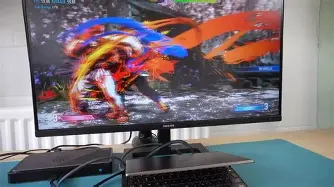
Comparison Table: Netgear Nighthawk RS100 vs Gtbox G Dock
Feature/Metric Netgear Nighthawk RS100 Gtbox G Dock eGPU Station Primary Function Full-Home/Office Network Infrastructure Hardware Performance Acceleration Laptop Connection Wi-Fi 7 / Ethernet (Wireless/Wired) Thunderbolt / OCuLink (Wired Only) Performance Impact Reduced Latency, Faster Downloads Increased GPU Power, Higher Frame Rates Expandability Connects 50+ background devices Provides USB/Video/SD Expansion Ports User Context Remote Work, Streaming, Cloud Work Gaming, Video Editing, 3D Design Installation Style Set-and-forget (Infrastructure) Active Docking (Peripheral) Buying Guide: Determining Your Hardware Priorities
Choosing between an infrastructure upgrade like the Netgear Nighthawk RS100 and a performance upgrade like the Gtbox G Dock requires an audit of your current digital pain points. Many users make the mistake of buying power when they actually need stability, or vice versa.
Identifying the Network Bottleneck
If you find that your laptop is plenty fast for your applications, but you suffer from "jitter" during Zoom calls, slow file syncs with Dropbox or Google Drive, or if your laptop loses connection when you move to the balcony, your bottleneck is the network. The Netgear Nighthawk RS100 is designed for the modern "Cloud First" user. If your work lives in a browser or a remote server, a faster GPU won't help you. You need the RS100 to ensure that the data pipe between your laptop and the web is as wide and clear as possible.
Discover deals on Laptops & Computers — updated daily.
View Offers →Identifying the Hardware Bottleneck
On the flip side, if your laptop feels "sluggish" when you try to open a CAD file, or if your video exports take three hours while the fans scream, your bottleneck is local hardware. This is where the Gtbox G Dock shines. It doesn't matter how fast your internet is if your internal graphics chip can't keep up with the software you're running. The G Dock is for the user who loves their laptop's portability for meetings but needs "heavy metal" performance for the actual production phase of their work.

The Synergy Factor
It is worth noting that for the ultimate professional setup, these two devices are not mutually exclusive. In fact, they complement each other. A Gtbox G Dock provides the local power to create, while the Netgear Nighthawk RS100 provides the global power to share and collaborate. Buyers should look at their budget and decide which "leg" of the tripod—portability, connectivity, or performance—is currently the shortest.
Conclusion: Which Is Actually Better?
The "better" device in this blind test is the one that solves your most frequent frustration. For the majority of users who are now working in hybrid environments, the Netgear Nighthawk RS100 offers a more universal improvement. It elevates every device in the home or office, ensuring the laptop is always connected at peak speeds. It is the silent enabler of the modern workstation. Its ability to manage complex network environments makes it an essential foundation for any serious tech setup.
However, for the specific niche of creators and gamers, the Gtbox G Dock is the more "transformative" purchase. It changes what the laptop is capable of on a fundamental level. It turns a portable computer into a beastly desktop replacement. While the Nighthawk makes the laptop's current tasks smoother, the G Dock allows the laptop to perform tasks it simply couldn't do before. Ultimately, the Gtbox G Dock wins for those seeking raw power, while the Netgear Nighthawk RS100 wins for those seeking a flawless, high-speed digital lifestyle. Both represent the pinnacle of their respective fields, proving that the modern laptop is only as good as the ecosystem that supports it.